Wednesday, August 10, 2011

Best Times to make Dua (Supplication)!


Best Times to make Dua (Supplication)!

بِسْمِ اللهِ الرَّحْمنِ الرَّحِيمِ
In the Name of Allah, The Most Merciful, The Most Kind

There are certain times dua (supplication) is more likely to be accepted by Allah (SWT) as mentioned by Prophet (SAW). These times are as follows:
1. The Last Third Of The Night
Abu Hurairah (RA) narrated that Allah’s Messenger (SAW) said:
PAKISTAN-ASIA-QUAKE-MUSLIMS-PRAYER‘In the last third of every night our Rabb (Cherisher and Sustainer) (Allah (SWT)) descends to the lowermost heaven and says; “Who is calling Me, so that I may answer him? Who is asking Me so that may I grant him? Who is seeking forgiveness from Me so that I may forgive him?.”‘ [Sahih al-Bukhari, Hadith Qudsi]
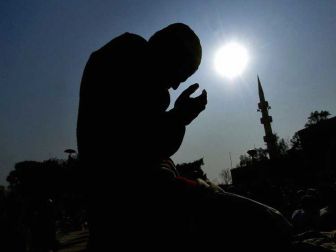
Amr ibn Absah narrated that the Prophet said:
‘The closest any worshipper can be to His Lord is during the last part of the night, so if you can be amongst those who remember Allah at that time, then do so.’[at-Tirmidhi, an-Nasa'i, al-Hakim - Sahih]
2. Late at night
When people are sleeping and busy with worldly pleasures Allah (SWT) gives the believers an opportunity, or an answer hour if they can fight sleep and invoke Allah (SWT) for whatever they need. The Prophet (SAW) said:
‘There is at night an hour, no Muslim happens to be asking Allah any matter of this world or the Hereafter, except that he will be given it, and this (occurs) every night.’
[Muslim #757]
3. Between Adhan and Iqamah
Anas (RA) narrated that Allah’s Messenger (SAW) said:
‘A supplication made between the Adhan and Iqama is not rejected.’
[Ahmad, abu Dawud #521, at-Tirmidhi #212, Sahih al-Jami #3408, an-Nasai and Ibn Hibban graded it sahih (sound)]
4. An Hour On Friday
Narrated Abu Hurairah (RA): Allah’s Messenger (SAW) talked about Friday and said:
‘There is an hour on Friday and if a Muslim gets it while offering Salat (prayer) and asks something from Allah (SWT), then Allah (SWT) will definitely meet his demand.’ And he (the Prophet (SAW) pointed out the shortness of that particular time with his hands.[Sahih al-Bukhari]


Some have said that this hour is from the time the Imam (prayer’s leader) enters the mosque on Friday’s prayer until the prayer is over (ie between the two khutbahs), whereas others have said that it is the last hour of the day (ie after the Asr prayer until the Maghrib prayer).
5. While Drinking Zamzam Water
Jaber (RA) narrated that Allah’s Messenger (SAW) said:
‘Zamzam water is for what it is drunk for.’ [Ahmad 3: 357 and Ibn Majah #3062].
This means that when you drink Zamzam water you may ask Allah (SWT) for anything you like to gain or benefit from this water such as healing from illness…. etc.
6. While Prostrating
Abu Hurairah (RA) narrated that Allah’s Messenger (SAW), said:
‘The nearest a slave can be to his Lord is when he is prostrating, so invoke (supplicate) Allah (SWT) much in it. [Muslim, abu Dawud, an-Nasa'i and others, Sahih al-Jami #1175]
When a Muslim is in his Salat (prayer) he is facing Allah (SWT) and when he prostrates he is the nearest he can be to Allah (SWT) so it is best to invoke Allah (SWT) at this time. It is said that while in prostration, one should not ask for worldy needs (ie a nice car, a new job, etc), but for the Hereafter.
7. When Waking Up at Night
Narrated Ubada Bin As-Samit that Allah’s Messenger (SAW) said:
‘Whomever wakes up at night and says La ilaha illallahu wahdahu la shrika lahu lahulmulku, wa lahul hamdu, wa huwa ala kulli shai’in qadir. Alhamdu lillahi, wa subhanallahi wa la ilaha illallahu, wallah akbir, wa la hawla wala quwata illa billah (none has the right to be worshipped but Allah (SWT) He is the only one who has no partners. His is the kingdom and all the praises are for Allah (SWT) All the glories are for Allah (SWT) And none has the right to be worshipped but Allah (SWT) and Allah (SWT) is the most Great and there is neither might nor power except with Allah (SWT) and then says, Allahumma ighfir li (O Allah! Forgive me) or invokes Allah (SWT), he will be responded to and if he makes ablution and performs Salat (prayer), his Salat (prayer) will be accepted. [Sahih al-Bukhari]
8. At The End Of The Obligatory Salat:
Narrated Abu Omamah (RA): that Allah’s Messenger (SAW) was asked, O Messenger of Allah, which supplication is heard (by Allah (SWT), he said the end of the night and at the end of the obligatory Salat (prayer) [at-Tirmidhi]. This time is after saying ‘At-tahyat’ , and before making Tasleem (finishing prayer)
9. The Night Of ‘Qadr’ (Decree)
This night is the greatest night of the year. This is the night which the almighty Allah (SWT) said about it, “The night of Al-Qadar (Decree) is better than a thousand months.” [Surah al-Qadr, 97: 3]
The Night of Decree is one of the odd nights of the last ten nights of the blessed month of Ramadan. The angels descend down to the earth, and the earth is overwhelmed with peace and serenity until the break of dawn and when he doors of Paradise are opened, the worshipper is encouraged to turn to Allah to ask for his needs for this world and the Hereafter.
10. During The Rain
Narrated Sahel Ibn Sa’ad (RA): that the Messenger of Allah (SAW) said: ‘Two will not be rejected, Supplication when the Adhan (call of prayer) is being called, and at the time of the rain’. [Al-Hakim 2: 114, and Abu Dawud #2540, ibn Majah]
‘Seek the response to your du’as when the armies meet, and the prayer is called, and when rain falls’ [reported by Imam al-Shafi' in al-Umm, al-Sahihah #1469]. The time of the rain is a time of mercy from Allah (SWT) so, one should take advantage of this time when Allah (SWT) is having mercy on His slaves.
11. At the Adhan
‘Seek the response to your du’as when the armies meet, and the prayer is called, and when rain falls’ [reported by Imam al-Shafi' in al-Umm, al-Sahihah #1469]
In another hadith; ‘When the prayer is called, the doors of the skies are opened, and the du’a is answered’ [al-Tayalisi in his Musnad #2106, al-Sahihah #1413]
12. The One Who Is Suffering Injustice and Opression
The Messenger of Allah (SAW) said to Mua’ad Ibn Jabal (RA), ‘Beware of the supplication of the unjustly treated, because there is no shelter or veil between it (the supplication of the one who is suffering injustice) and Allah (SWT)’ [Sahih Al-Bukhari and Muslim]
The prophet (SAW) declared, ‘Three men whose dua is never rejected (by Allah) are: the fasting person until he breaks his fast (in another narration, when he breaks fast), the just ruler and the one who is oppressed.’[Ahmad, at-Tirmidhi - Hasan]
In another hadith; The Prophet (SAW) declared: ‘Three du’as are surely answered: The du’a of the oppressed, the du’a of the traveler, and the du’a of the father/mother (upon their child)’. The One who is suffering injustice is heard by Allah (SWT) when he invokes Allah (SWT) to retain his rights from the unjust one or oppressor. Allah (SWT) has sworn to help the one who is suffering from injustice sooner or later as the Messenger of Allah (SAW) said.
13. The Traveler
The Messenger of Allah (SAW) said; Three supplications will not be rejected (by Allah (SWT)), the supplication of the parent for his child, the supplication of the one who is fasting, and the supplication of the traveler. [al-Bayhaqi, at-Tirmidhi - Sahih]
During travel supplication is heard by Allah (SWT) if the trip is for a good reason, but if the trip is for a bad intention or to perform illegal things (making sins) this will not apply to it.
14. The Parent’s Supplication for their Child
The Messenger of Allah (SAW) said; Three supplications will not be rejected (by Allah (SWT)), the supplication of the parent for his child, the supplication of the one who is fasting, and the supplication of the traveler. [al-Bayhaqi, at-Tirmidhi - Sahih]
15. Dua after praising Allah and giving salat on the Prophet (SAW) in the tashahhud at the end of salat.
Narrated Faddalah ibn Ubayd (RA): that the Messenger of Allah (SAW) said: ‘When anyone of you makes du’a, let him start by glorifying his Lord and praising Him, then let him send blessings upon the Prophet (SAW), then let him pray for whatever he wants’
[abu Dawud #1481, at-Tirmidhi #3477]
In another hadith; Baqiy ibn Mukhallid (RA) narrated that that the Messenger of Allah (SAW) said: ‘Every du’a is not responded to until one sends blessings upon the Prophet (SAW)’ [al-Bayhaqi]
In another hadith; Umar (RA) narrated that the Prophet (SAW) said: ‘Du’a is detained between the heavens and the earth and no part of it is taken up until you send blessings upon your Prophet (SAW)’ [at-Tirmidhi #486]
After a person has finished his tashahhud and before saying the ’salam’, supplication at this time is one likely to be responded to.
Ibn Mas’ud narrates: I was once praying, and the Prophet (SAW), Abu Bakr and Umar (were all present). When I sat down (in the final tashahhud), I praised Allah, then sent salams on the Prophet, then started praying for myself. At this, the Prophet (SAW) said:
‘Ask, and you shall be given it! Ask, and you shall be given it!’ [at-Tirmidhi #593 - hasan, Mishkat al-Misbah #931]
16. The dua of a Muslim for his absent brother or sister Muslim stemming from the heart.
The prophet (SAW) said:
‘There is no believing servant who supplicates for his brother in his absence where the angels do not say, ‘the same be for you” [Muslim]
17. Dua on the Day of Arafat
The Messenger of Allah (SAW) said: ‘The best supplication is the supplication on the day of Arafat’. [at-Tirmidhi and Malik]
The day of Arafat is the essence and pinnacle of Hajj. On this great and momentous day, millions of worshippers gather together on one plain, from every corner of the world, with only one purpose in mind – to respone to the call of their Creator. During this auspicious day, Allah does not refuse the requests of His worshippers.
18. Dua during the month of Ramadan
Ramadan is month full of many blessings, thus the du’a of Ramadan is a blessed one. This can be inferred from the Prophet (SAW) saying: ‘When Ramadan comes, the Doors of Mercy (another narration says Paradise) are opened, and the doors of Hell are closed, and the Shaitans are locked up’ Thus, it is clear that du’a during Ramadan has a greater chance of being accepted, as the Gates of Paradise and Mercy are opened. [Sahih al-Bukhari #1899, Muslim #1079 and others]
19. Dua when the Armies meet
When the Muslim is facing the enemy in battle, at this critical period, the du’a of a worshipper is accepted.
Sahl ibn Sa’d (RA) narrtaed the the Prophet (SAW) said: ‘Two duas are never rejected, or rarely rejected: the du’a during the call for prayer, and the du’a during the clamity when the two armies attack each other’ [Abu Dawud #2540, ibn Majah, al-Hakim]
20. When Muslims gather for the purpose of invoking and remembering Allah (Dhikrullah).
The Prophet (SAW) said: If a group of people sit together remembering Allah, the angels will circle them, mercy will shroud them, peace will descend onto them and Allah will remember them among those with Him. [Muslim]
21. First Ten days of Dhul-Hijjah
The Prophet (SAW) said: ‘There are no days during which good deeds are more beloved to Allah than during these ten days’
[Sahih al-Bukhai #969 and others]
22. Dua when the heart reaches out to Allah and is ready to be totally sincere

23. At Midnight
Abu Umamah (RA) said, the Prophet (SAW) was questioned; ‘Which du’a is heard (by Allah)?’ He answered, ‘At midnight and at the end of every obligatory prayer.’ [at-Tirmidhi - Hasan]
25. Dua of people after the death of a person
In a long hadith, Umm Salamah (RA) narrated that the Prophet (SAW) said, when Abu Salamah had just passed away, and had closed his eyes, ‘Do not ask for yourselves anything but good, for the angels will say ‘Ameen’ to all that you ask for. O Allah, forgive Abu Salamah, and raise his ranks among those who are guided.’ [Muslim, abu Dawud, Ahmad]
26. Dua of the one fasting until he breaks his fast.
The Messenger of Allah (SAW) said; Three supplications will not be rejected (by Allah (SWT)), the supplication of the parent for his child, the supplication of the one who is fasting, and the supplication of the traveler. [al-Bayhaqi, at-Tirmidhi - Sahih]
27. Dua of the one fasting at the time of breaking fast
The prophet (SAW) declared, ‘Three men whose dua is never rejected (by Allah) are: when a fasting person breaks fast (in another narration, the fasting person until he breaks his fast), the just ruler and the one who is oppressed.’[Ahmad, at-Tirmidhi - Hasan]
29. Dua of a just Ruler
The prophet (SAW) declared, ‘Three men whose dua is never rejected (by Allah) are: the fasting person until he breaks his fast (in another narration, when he breaks fast), the just ruler and the one who is oppressed.’[Ahmad, at-Tirmidhi - Hasan]
30. Dua of a son or daughter obedient to his or her parents
It is well known in the story narrated in hadith os three men who were trapped by a huge stone in a cave. One of them who was kind to kis parents asked Allah to remove the stone, and his du’a was answered. [Sahih al-Bukhari 3:36 #472]

31. Dua immediately after wudu
Umar ibn Al-Khattab reported that the Prophet (SAW) said:
‘There is not one of you that makes wudu, and does it perfectly, then says: I testify that there is no diety worthy of worship except Allah. he is Alone, having no partners. And I bear witness that Muhammad is His slave and messenger’, except that the eight gates of Paradise are opened for him, and he can enter into it through whichever one he pleases’ [Muslim #234, abu Dawud #162, Ahmad, an-Nasa'i]
Saying what has been mentioned in the hadith that is directly related to it (ablution)


32. Dua after stoning the Jamarat at Hajj
The stoning of the small Shaitan (jamrat sugra), or the middle Shaitan (jamrat wusta) pillars during Hajj. It is narrated that the Prophet (SAW) would stone the small Jamarah (one of the three pillars that is stoned in the last days of Hajj), then face the qiblah, raise his hands, and make du’a for a long time. He would then stone the middle Jamarah and do the same. When he stoned the large Jamarah, he would depart without making any du’a. [Sahih al-Bukhari #1753 and others]
33. At the Crowing of a Rooster
Abu Hurairah (RA) narrated that the Prophet (SAW) said:
‘When you hear a rooster crowing, then ask Allah for His bounties, for it has seen an angel, and when you hear a donkey braying, then seek refuge in Allah from Shaitan, for it has seen a Shaitan’ [Sahih al-Bukhari, Muslim, Ahmad, Sahih al-Jami #611]

34. Du’a made inside the Ka’bah
The Ka’bah is a sanctuary that has no comparison in the entire world. The du’a of one who prays inside the hijr is considered as being made inside the ka’bah, as it is part of the house (Baitullah). [This is the semicircle to the right of the Ka'bah if you face the door, opposite to the Yemeni corner and the Black stone wall.]
Usamah ibn Zayd narrated,
‘When the Prophet (SAW) entered the House (Ka’bah), he made du’a in all of its corners [Muslim 2: 968 and others]

35. Du’a on the mount of Safa or Marwah during Umrah or Hajj
It is narrated that the Prophet (SAW) would make long du’as at Safa and Marwah. [Muslim #1218 and others]
36. Dua at any of the holy sites.
37. While reciting Surah al-Fatihah
The Prophet (SAW) said that Allah the Exalted had said:
‘ I have divided the prayer into two halves between Me and My servant, and My servant will receive what he asks for. When the servant says: Praise be to Allah, the Lord of the universe, Allah the Most High says: My servant has praised Me. And when he (the servant) says: The Most Compassionate, the Merciful, Allah the Most High says: My servant has lauded Me. When he (the servant) says: Master of the Day of Judgment, He remarks: My servant has glorified Me, and sometimes He will say: My servant entrusted (his affairs) to Me. When he (the worshipper) says: Thee do we worship and of Thee do we ask help, He (Allah) says: This is between Me and My servant, and My servant will receive what he asks for. Then, when he (the worshipper) says: Guide us to the straight path, the path of those to whom Thou hast been Gracious — not of those who have incurred Thy displeasure, nor of those who have gone astray, He (Allah) says: This is for My servant, and My servant will receive what he asks for. [Muslim 4: 395]

38. Saying ‘Ameen’ during prayer

After finishing the recitation of al-Fatihah, the saying of’Ameen’ in congregation. The Prophet (SAW) said:
‘When the Imam says ‘Ameen’, then recite it behind him (as well), because whoever’s Ameen coincides with the Ameen of the angels will have all of his sins forgiven.’ [Sahih al-Bukhari #780, Muslim #410 and others]
39. While visiting the sick, and dua made by the sick
Umm Salamah narrated that the Prophet (SAW) said:
‘When you visit the sick, or the dead then say good, because the angels say ‘Ameen’ to whatever you say [Muslim #2126]
Ali (RA) reported that the Prophet (SAW) said:
‘When a Muslim visits his sick Muslim brother in the morning, seventy thousand angels make dua for his forgiveness till the evening. And when he visits him in the evening, seventy thousand angels make dua for his forgiveness till the morning, and he will be granted a garden for it in Jannah.’
[at-Tirmidhi, abu Dawud]

ULTIMATE JOURNEY

ULTIMATE JOURNEY

Ticket type:One-way
Price: Absolutely free (booking confirmed)

Passenger Details
Name: One of the 'children of Adam'
Origins: From clay
Address: Planet Earth

Conditions Of Travel:
Departure: from life on earth
Destination: eternal life
Stop-over: hotel (2 meters under the ground, for one person)
Duration of flight: from couple of seconds to several millions of
years

Departure time:
Time of death: (exact time is unknown, but it can
happen earlier than expected)
Arrival time: On the Judgment Day (not specified in the timetable)

Information About Interrogation:
On the arrival to the hotel (grave): incorruptible
Auditors - two angels: Munkar & Nakir, will immediately start
questioning. Three questions will be asked:
1)Who is your God?
2)Who is your prophet?
3)What is your religion?
Questions will follow about your life on earth. For more
information, refer to 27th Aya of Sura "Ibrahim" of the Holy Quran.

Luggage:
Despite the fact that the airplane transfers only one passenger at a
time, there are some restrictions on the amount of baggage that you
can take with you:
1) You can take with you 5 meters of white cloth
2) Any items of material life of earth are strictly forbidden.
3) Realistic luggage should consist of good deeds, modest behavior
and of well spent time on calling people to Islam.

Important instructions:
All the passengers should remember that tickets are not exchangeable
or refundable.
This journey is compulsory for representatives of all races,
nationalities, religions and of all ages.
Delays are not stipulated.

Captain:
Angel of Death will not compromise on changing the date and time of
departure.

For more information:
Read instructions, which you can find in The Holy Quran and Sunnah.
You could also consult alims(scholars). Please do it as soon as
possible.
During your journey you will not be provided with oxygen mask, as
your breathing system will be terminated just before the departure
time.

Additional instructions:
You don't need to take care of your boarding pass, passport and
other travel documents. To prepare for a comfotable flight:
- Pray 5 times a day
- Read the Holy Quran
- Follow the sunnah to the best of your ability
- and be ready for your flight, as you may have to depart any minute
(even now)


Final warning:
Final destination depends on you! Please do not waste your time on
planet earth. Remember, you have one-way ticket:
Either to Hell or to Paradise .

Jahannam OR Jannah.

Hence read & practice the instructions from the manuals ( Quraan and
Sunnah) carefully
And follow to reach JANNAH.


Insha Allah , With HIS Grace, We?ll meet there in the Gardens of Jannah
__________________

ويوم علينا ويوم لنا

O my soul! It is not, except a few days of patience; As if the extent were but a few dreams. O my soul! Pass quickly on through this world; And leave it, for indeed life lies ahead of it!
[Imaam ash-Shaafi'ee; d.204H]

“O feet of patience, keep going, for what remains is only a little. Remember the sweetness of worship, then the bitterness of striving will become easier for you.” (Ibn al-Qayyim : al-Fawaa’id)

Monday, August 8, 2011

Eating Habits in Ramadan

In The name of Allah,The Most Merciful,The Most gracious

Eating Habits in Ramadan
The Messenger of Allah (may Allah bless him and grant him peace) addressed his companions on the last day of Sha`ban, saying, “Oh people! A great month has come over you; a blessed month; a month in which is a night better than a thousand months; month in which Allah has made it compulsory upon you to fast by day, and voluntary to pray by night. Whoever draws nearer (to Allah) by performing any of the (optional) good deeds in (this month) shall receive the same reward as performing an obligatory deed at any other time, and whoever discharges an obligatory deed in (this month) shall receive the reward of performing seventy obligations at any other time. It is the month of patience, and the reward of patience is Heaven. It is the month of charity, and a month in which a believer’s sustenance is increased. Whoever gives food to a fasting person to break his fast, shall have his sins forgiven, and he will be saved from the Fire of Hell, and he shall have the same reward as the fasting person, without his reward being diminished at all.” [Narrated by Ibn Khuzaymah]

Sunday, August 7, 2011

In The name of Allah,The Most Merciful,The Most gracious

Preparing for Ramadan

A talk given by Shaykh Zahir regarding the virtues of the blessed month of Ramadhan and how to prepare for it.

Download

THE HOLY MONTH OF RAMADAN AND FASTING DURING IT

In the Name of God, the Merciful, the Compassionate

The month of Ramadan in which the Quran was revealed, a guidance for mankind, clear signs of guidance and the criterion. (2:185)

Fasting in the holy month of Ramadan is one of the foremost of the five pillars of Islam

Fasting in the holy month of Ramadan is one of the foremost of the five pillars of Islam, as well as being among the greatest of the symbols of Islam. That fasting has many purposes relating both to the Lordship of God and thanksgiving for His bounties, and to man’s individual and collective life, as well as to his self-training and self-discipline.

One of the multiple purposes of fasting connected with the Lordship of God is that God manifests the Perfection of His Lordship and His being the All-Merciful and All-Compassion-ate upon the surface of the earth which He has designed as a table upon which He has laid out all the varieties of His bounties in a way beyond the imagination of the inhabitants of the earth. Nevertheless, people cannot perfectly discern the reality of this situation because of heedlessness and the blinding veil of causality. But in the holy month of Ramadan, the believers, like an army waiting for the order ‘March!’, display a manner of worshipping in expectation of the command of ‘Help yourself!’ towards the end of the day, and they thus respond to that magnificent and universal Mercy with a comprehensive and harmonious act of collective worship.

Fasting is the key to a true, sincere, comprehensive and universal thanksgiving

One of the numerous purposes of fasting in the holy month of Ramadan concerning thanksgiving for the bounties of God Almighty is that there is a price for the food brought from the kitchen of a king by the servant carrying the trays of food. Obviously, it would be folly of an infinite degree to tip the servant but not to recognize the king who sent the food - an act which would mean disrespect for that gift of precious food. In the same way, God Almighty has spread for mankind His countless bounties of infinite variety on the face of the earth. These bounties require the payment of a price, which is thanksgiving. The apparent causes of those bounties, or those who bring them to us are like the food-carrying servant in the example above. We pay the servants, feel indebted to them, and sometimes thank them and thereby show them a degree of respect they have not merited. The true Giver of Bounties is infinitely more deserving of thanks for those bounties received than the causes or the means by which they come to us. One thanks Him by acknowledging one’s need for the bounties, and being fully appreciative of them and ascribing them directly to Him.

Fasting during the holy month of Ramadan is the key to a true, sincere, comprehensive and universal thanksgiving. Many people are unable to appreciate most of the bounties they enjoy since they suffer no hunger. A piece of dry bread, for example, means nothing as Divine bounty for those who are full, especially if they are rich, although it is, as even testified by his sense of taste, a very valuable bounty of God in the sight of a believer at the time of breaking his fast. Everyone, whether a king or the poorest of people, are favored, in the holy Ramadan, with a heart-felt thanksgiving by understanding the value of Divine bounties. Also, because of being forbidden to eat during daytime, a believer thinks: those bounties do not originally belong to me, and I am not free to regard them as mere food or drink. One Other owns them, and He grants them to me. So, I should wait for His permission to eat them. By thus acknowledging whatever he eats and drinks to be a gift of God, the believer thanks God tacitly. On account of this, fasting becomes a key to thanksgiving, which is a real human duty in many respects.

Fasting has many purposes in connection with man’s collective life, one of which is this:

God has created human beings differently in respect of their livelihood. Because of this, He calls the rich to the help of the poor. However, only through the hunger of fasting can the rich feel the hunger and tragic situation of the poor. Without fasting, many rich and self-indulgent people cannot perceive how painful hunger and poverty are, and to what extent the poor need care. Whereas, care for one’s fellow-beings is a foundation of true thanksgiving. There is certainly one poorer than each individual, so everyone is obliged to show care for the one poorer than him. Unless, therefore, one is obliged to suffer hunger, it is nearly impossible for him to do good or give help to his fellow-beings as required by that duty of care. Even if he does, he cannot do it as perfectly as he should, since he does not feel the condition of the hungry to the same extent.

There are many Divine purposes for the obligation of fasting

There are many Divine purposes for the obligation of fasting during Ramadan related to self-training and self-discipline. One of those purposes is as follows:

The carnal self desires to be free and unrestricted and regards itself to be so. It even wishes, by its very nature, for an imagined lordship and free, arbitrary action. Disinclined to thinking that it is being trained and tested through the countless bounties of God, it swallows up, like an animal, those bounties in the manner of a thief or robber, especially if it has a degree of wealth and power accompanied by heedlessness.

It is in holy Ramadan that the selfhood of everyone, whether the richest or the poorest, understands that, rather than owning itself, it is owned by One Other, and rather then being free, it is a servant. Unless it is ordered, or permitted, it is unable to do even the most common thing like eating and drinking, and thereby its illusory lordship is shattered, it can admit to servanthood and performs its real duty, which is thanksgiving.

Fasting also prevents the carnal self from rebellious acts and adorns it with good morals.

Man’s carnal self forgets itself through heedlessness. It does not see, nor does it want to see, the infinite impotence and poverty and the defects of the utmost degree in its very nature. It does not reflect how it is exposed to misfortunes and subject to decay, that it consists of flesh and bones tending to rapid disintegration and decomposition. It rushes upon the world with a violent greed and attachment as if it had a steel body and would live forever. It clings to everything profitable and pleasurable. In this state, it forgets its Creator, Who trains it with a perfect care. Being immersed in the swamp of bad morals, it thinks about neither the consequences of its life in this world nor about its afterlife.

Fasting during holy Ramadan, however, causes even the most heedless and stubborn to feel their weakness and innate poverty. Hunger becomes an important consideration for them and reminds them how fragile their bodies are. They come to perceive to what extent they need compassion and care and, giving up haughtiness, feel a desire to take refuge in the Divine Court in perfect helplessness and destitute, and rise to knock at the door of Mercy with the hand of tacit thanksgiving, provided, of course, that heedlessness has not yet corrupted the individual completely.

Fasting has a connection also with the revelation of the holy Quran

Fasting during Ramadan has a connection also with the revelation of the holy Quran. As is generally known, the Quran began to be revealed in Ramadan. This connection has many implications. One of these is that - just as if the Quran were to be revealed in every Ramadan, a believer should seek to be like the angels and abandon eating and drinking, and divest himself of the vain preoccupations and gross needs of his carnal self. During Ramadan, he should recite or listen to the Quran as if it were being revealed for the first time or, if he is able, listen to the Quran as if he were hearing it recited by the Prophet Muhammad, upon him be peace and blessings, or by the Archangel Gabriel to Muhammad, or revealed by God Himself to Muhammad through Gabriel. Also, he should respect the Quran in the actions of his daily life and, by conveying its message to the others, demonstrate the Divine purpose for revealing the Quran.

The Muslim world becomes in Ramadan like a huge mosque where millions of reciters recite the Quran, that heavenly address, to the inhabitants of the earth. Demonstrating the reality of the verse, The month of Ramadan, in which the Quran was revealed, Ramadan proves itself to be the month of the Quran: while some members of the vast congregation in that great mosque of the Muslim world listen to its recitation with solemn reverence, others recite it themselves. As it is most disagreeable to forsake that heavenly spiritual state by giving in to the prompting of the carnal self to eat and drink in the sacred ‘mosque’, an action that is bound to provoke the dislike of the whole congregation - it is also most disagreeable and must, plainly, provoke the dislike and contempt of the whole Muslim world to oppose the Muslims who fast during the holy month of Ramadan.

Fasting has also many purposes related to the spiritual rewards of man.

Fasting during Ramadan has also many purposes related to the spiritual rewards of man, who has been sent to the world to sow it with the seeds of the next life. The following paragraphs explain one of those purposes.

The rewards for the good deeds done in Ramadan are multiplied by a thousand. According to one hadith, ten rewards are given for each letter of the Wise Quran. The recitation of a single letter means ten good deeds, and brings forth ten fruits of Paradise. However, in the whole month of Ramadan, the reward for each letter of the Quran is multiplied not by ten, but by a thousand, even by thousands for some particular verses like the ‘Verse of the Throne’. The reward is still greater on the Friday nights of holy Ramadan. Furthermore, the reward for each letter of the holy Quran recited in the Night of Power is multiplied by thirty thousand. Thus, the Quran, each of whose letters yields thirty thousand permanent fruits of Paradise, becomes in Ramadan like a huge blessed tree which produces for believers millions of permanent fruits of Paradise. Consider, then, how holy and profitable a trade this is, and know in how great a loss those are who do not appreciate the letters of the Quran!

So, the holy month of Ramadan is the most proper time for carrying on that most profitable ‘trade’ in the name of the afterlife. It is like a most fertile field to cultivate for the harvest of the afterlife. For the multiplication of the reward for good deeds, it is like April in spring. It is also a sacred, illustrious festival for the ‘parade’ of those who worship the Sovereignty of God’s Lordship. Because of this, fasting is made obligatory for believers in Ramadan so that they should not gratify the animal appetites of the carnal self and indulge in its useless fancies. Since they become like angels while fasting or engaged in a trade for the next life, each acts as a mirror reflecting the Self-Sufficiency of God by moving in the direction of becoming a pure spirit manifested in corporeal dress through the abandonment of the world for a fixed period. In fact, the holy Ramadan contains, and causes a believer to gain, through fasting, a permanent life in a short period in this world.

One Ramadan may enable a believer to gain as much reward as could be earned in a life of eighty years.

One Ramadan may enable a believer to gain as much reward as could be earned in a life of eighty years. This can be decisively proved by the fact that the Night of Power is, as declared by the Quran, more profitable than eighty years in which there is not a Night of Power. A worldly king may announce a few days’ festival in the year to mark some special occasions like his accession to the throne, and he honors his faithful subjects on those days with special favors. Likewise, the Eternal, Majestic King of the eighteen thousand worlds sent down in holy Ramadan the Wise Quran, which is His exalted decree to all of those eighteen thousand worlds. For this reason, wisdom requires that Ramadan should be a special Divine festival in which the bounties of God’s Lordship will be poured out and the spirit beings will come together. Since, then, Ramadan is a Divinely ordained festival, it is proper that fasting in it would be commanded so that people should withdraw to some extent from their bodily preoccupations. Excellence in fasting, aside from its preventing the satisfaction of the stomach, is possible through refraining from sins committed by the senses or members of the body, such as the eyes, ears, heart, mind, and imaginative and contemplative faculties, and using them, instead, in the acts of worship particular to each. For example, the one who fasts, should prevent his tongue from lying, backbiting, bad language and indecent talk, and make it busy with the recitation of the Quran, glorification of God, seeking His forgiveness, and calling His blessing upon the Prophet Muhammad, upon him be peace and blessings. In the same way, he should prevent his eyes from looking at, and his ears from listening to, the forbidden things. He should, instead, use his eyes to see such things as those which, for example, will give a spiritual lesson or moral warning; and use his ears to listen to the Quran and truths. When the stomach, which is like a big factory in the body, is stopped from working, the other members, which may be likened to very small workshops in comparison with the stomach, can, in fact, easily be made to follow it.

One of the purposes of fasting related to man’s individual life is as follows:

Fasting is a diet from the viewpoint of both the physical and spiritual health of man. If the carnal self acts in eating and drinking in whatever way it wishes, this is harmful to man’s physical health, as well as being a poison for his spiritual life because of the absence of discrimination between what is lawful and unlawful. It becomes very difficult for such a carnal self to obey the heart and spirit. Without recognizing any principles, it takes the reins of man and drives him in whatever direction it desires. But, in Ramadan it gets accustomed to dieting through the fast and, in self-discipline, it is trained to learn to obey orders. Further, it does not cause the poor stomach to suffer illness because of over-eating without enough time allowed for proper digestion. In addition, since it has learned to forsake eating even what is lawful, it gains the ability to follow the decree of reason and religion to refrain from the unlawful. Thus, the carnal self tries not to corrupt the spiritual life of its owner.

Also, the great majority of mankind frequently become subject to hunger. In order to endure a long-lasting hunger with patience, people should train themselves in self-discipline and an austere lifestyle. Fasting during Ramadan provides just such a training based on patience with hunger of fifteen hours, or even twenty-four hours if the meal before dawn is missed. This means that fasting is a cure for the impatience and want of endurance, which double the misfortune of mankind.

Many members of the human body are either in direct or in indirect service of the factory of the stomach. If that factory is not made to stop working in daytime during a certain month of the year, it keeps those members busy with itself, forgetful of the kinds of worship and sublime duties peculiar to each. It is for this reason that, since the oldest times, saints have usually preferred to get themselves used to an austere lifestyle for the sake of spiritual and human perfection. Fasting in Ramadan reminds us that the members of the body have not been created only for the service of the stomach. In Ramadan, many of those members take pleasure in the angelic and spiritual pleasures, instead of the material ones. This is the reason why in Ramadan, believers receive, according to the extent of their spiritual perfection, different degrees of spiritual pleasures and enlightenment. The heart, the spirit, the reason and innermost senses of man are refined through fasting in Ramadan. Even if the stomach wails during fasting, these senses rejoice greatly.

Fasting during Ramadan breaks the illusory lordship of the carnal self

Fasting during Ramadan breaks the illusory lordship of the carnal self and, reminding it of its innate helplessness, convinces it that it is a servant.

The carnal self does not like to recognize its Lord, and claims lordship in great obstinacy. However much it is made to suffer, it preserves that temperament. It is only hunger which can alter that temperament. Fasting during Ramadan breaks the obstinacy of the carnal self and, by showing to it its intrinsic helplessness and poverty, reminds it that it is only a servant.

It is related from God’s Messenger that God Almighty asked the carnal self: ‘Who am I and who are you?’ The carnal self replied: ‘You are Yourself, and I am myself.’ However much God tormented it and asked the same question, He received the same answer: ‘You are Yourself, and I am myself.’ At last, God subjected it to hunger, and when asking the same question, the reply came: ‘You are my All-Compassionate Lord; I am Your helpless servant’.

O God, grant peace and blessings to our master Muhammad in a way to please You and to give him his due, to the number of the rewards for reciting the letters of the Quran in the month of Ramadan, and to his family and Companions.

Glorified be your Lord, the Lord of Honor and Power; exalted above what they falsely ascribe to Him! And peace be upon the Messengers! And all praise be to God, the Lord of the Worlds. Amen!

Fasting is the key to a true, sincere, comprehensive and universal thanksgiving

One of the numerous purposes of fasting in the holy month of Ramadan concerning thanksgiving for the bounties of God Almighty is that there is a price for the food brought from the kitchen of a king by the servant carrying the trays of food. Obviously, it would be folly of an infinite degree to tip the servant but not to recognize the king who sent the food - an act which would mean disrespect for that gift of precious food. In the same way, God Almighty has spread for mankind His countless bounties of infinite variety on the face of the earth. These bounties require the payment of a price, which is thanksgiving. The apparent causes of those bounties, or those who bring them to us are like the food-carrying servant in the example above. We pay the servants, feel indebted to them, and sometimes thank them and thereby show them a degree of respect they have not merited. The true Giver of Bounties is infinitely more deserving of thanks for those bounties received than the causes or the means by which they come to us. One thanks Him by acknowledging one’s need for the bounties, and being fully appreciative of them and ascribing them directly to Him.

Fasting during the holy month of Ramadan is the key to a true, sincere, comprehensive and universal thanksgiving. Many people are unable to appreciate most of the bounties they enjoy since they suffer no hunger. A piece of dry bread, for example, means nothing as Divine bounty for those who are full, especially if they are rich, although it is, as even testified by his sense of taste, a very valuable bounty of God in the sight of a believer at the time of breaking his fast. Everyone, whether a king or the poorest of people, are favored, in the holy Ramadan, with a heart-felt thanksgiving by understanding the value of Divine bounties. Also, because of being forbidden to eat during daytime, a believer thinks: those bounties do not originally belong to me, and I am not free to regard them as mere food or drink. One Other owns them, and He grants them to me. So, I should wait for His permission to eat them. By thus acknowledging whatever he eats and drinks to be a gift of God, the believer thanks God tacitly. On account of this, fasting becomes a key to thanksgiving, which is a real human duty in many respects.

Saturday, August 6, 2011

THE HOLY MONTH OF RAMADAN AND FASTING DURING IT

THE HOLY MONTH OF RAMADAN AND FASTING DURING IT
In the Name of God, the Merciful, the Compassionate
The month of Ramadan in which the Quran was revealed, a guidance for mankind, clear signs of guidance and the criterion. (2:185)
Fasting in the holy month of Ramadan is one of the foremost of the five pillars of Islam
Fasting in the holy month of Ramadan is one of the foremost of the five pillars of Islam, as well as being among the greatest of the symbols of Islam. That fasting has many purposes relating both to the Lordship of God and thanksgiving for His bounties, and to man’s individual and collective life, as well as to his self-training and self-discipline.
One of the multiple purposes of fasting connected with the Lordship of God is that God manifests the Perfection of His Lordship and His being the All-Merciful and All-Compassion-ate upon the surface of the earth which He has designed as a table upon which He has laid out all the varieties of His bounties in a way beyond the imagination of the inhabitants of the earth. Nevertheless, people cannot perfectly discern the reality of this situation because of heedlessness and the blinding veil of causality. But in the holy month of Ramadan, the believers, like an army waiting for the order ‘March!’, display a manner of worshipping in expectation of the command of ‘Help yourself!’ towards the end of the day, and they thus respond to that magnificent and universal Mercy with a comprehensive and harmonious act of collective worship.

Monday, July 18, 2011

Welcome The Holy Month of Ramadan


Welcome The Holy Month of Ramadan
O People! The month of Allah (Ramadan) has approached you with His mercy and blessings. This is the month that is the best of all months in the estimation of Allah. Its days are the best among the days; its nights are the best among the nights. Its hours are the best among the hours.
This is a month in which he has invited you. You have been, in this month, selected as the recipients of the honors of Allah, the Merciful. In this holy month, when you breathe, it has the Sawab/thawab (heavenly reward) of 'Tasbeeh' (the praise of Allah on rosary beads), and your sleep has the thawab of worship.
Your good deeds are accepted in this month. So are your invocations. Therefore, you must invoke your Lord, in right earnest, with hearts that are free from sins and evils, that Allah may bless you, observe fast, in this month, and recite the Holy Qur'an.
Verily! The person who may not receive the mercy and benevolence of Allah in this month must be very unfortunate having an end as bad (in the Hereafter). While fasting, remember the hunger and thirst of tomorrow in Qiyamat. Give alms to the poor and the needy. Pay respects to your elders.
Have pity on those younger than you and be kind towards your relatives and kinsmen. Guard your tongues against unworthy words, and your eyes from such scenes that are not worth seeing (forbidden) and your ears from such sounds that should not be heard by you.
Be kind to orphans so that when your children become orphans they also may be treated with kindness. Do invoke that Allah may forgive your sins. Do raise your hands at the time of Salat (Prayers), as it is the best time for asking His mercy. When we invoke at such times, we are answered by Him, when we call Him, He responds, and when we ask for anything, it is accepted by Him.
O People! You have made your conscience the slave of your desires; make it free by invoking Him for Istighfar (repentance/forgiveness). Your back is breaking under the heavy load of your sins, so prostrate before Him for long intervals and make it lighter.
Do understand fully well that Allah has promised in the name of His Majesty and Honor that He will not take to task such people who fast and offer Salat in this month and perform 'sajda' (prostration), and will guard their bodies against the Fire of Hell on the Day of Judgment.
O People! If anybody amongst you arranges for the 'Iftar' (food for the ending of the fast) of any believer, then Allah will give him a reward as if he has set free a slave. He will forgive his minor sins.
Then the companions of the Prophet (S.A.W.) said: "But everybody amongst us does not have the means to do so?"
The Prophet told them: - Keep yourself away from the Fire of Hell, by inviting for 'Iftar', though it may consist of only half a date or simply with water if you have nothing else. O People! Anybody who may cultivate good manners in this month will walk over the 'Siraat' (Bridge) in 'Qiyamat', though his feet may be shaking.
Anybody who in this month may take light work from his servants (male or female), Allah will make easy his accounting on the Day of Judgment.
Anybody who does not tease others in this month, Allah will keep him safe from His wrath in Qiyamat. Anybody, who respects and treats an orphan with kindness in this month, Allah shall look at him with dignity in Qiyamat. Anybody who treats well his kinsmen, in this month, Allah will bestow His mercy on him in Qiyamat, while anybody who maltreats his kinsmen in this month, Allah will keep him away from His mercy, in Qiyamat.
Whoever offers 'Sunnat' (Recommended) prayers in this month, Allah will give him a certificate of freedom from Hell. Whosoever offers one 'Wajib' Salat in this month, for him the Angels will write the rewards of 70 such prayers, which were offered by him in any other months.
Whosoever recites repeatedly 'Salat and salam' on me, Allah will keep the scales of his deeds heavy, when in Qiyamat the scales of others will be tending towards lightness.
Whosoever recites in this month only one 'Ayat' (verse of the Holy Qur'an), he will be rewarded in a manner as if he had recited the full Qur'an in the other months.
O People! The Gates of Paradise remain opened in this month. Do invoke that the gates may not be closed on you, while the Gates of Hell are closed. Do invoke that these gates may never be opened. During this month Shaytan (Saten) is imprisoned so ask your Lord not to let him have power over you.
I seek refuge in Allah from the accursed satan
In the name of Allah the Merciful the Beneficent
Greetings and welcome O month of Ramadan
Greetings and welcome O month of the Qur'an
Greetings and welcome O month of light
Greetings and welcome O month of gathering
Greetings and welcome O month of the poor
Greetings and welcome O month of repentence and return
Greetings and welcome O month of invocation and standing in supplication
Greetings and welcome O month of the poor and the weak
Greetings and welcome O month of doing one's best
Greetings and welcome O month of the sinners
Greetings and welcome O month of victory and success
Greetings and welcome O month of intimate discourse and glorification
Greetings and welcome O month of the call and the guidance
Greetings and welcome O month of rest-between-prayers and standing to pray
Greetings and welcome O month of lanterns and lights
Greetings and welcome O month of coffers and treasures
Greetings and welcome O month of angels and safety
Greetings and welcome O month of breaking fast and eating before the fast
Greetings and welcome O month of tilling and of deafness to sin
Greetings and welcome O month of the weak
Greetings and welcome O month of repayment and reward
Greetings and welcome O month of fast and patience
Greetings and welcome O month of felicity
Greetings and welcome O month of the key
Greetings and welcome O month of union and reunion
Greetings and welcome O month of friendship and love
Greetings and welcome O master of all months
We have not treated you according to your immense price
Nor truly sanctified you, O month of forgiveness,
But be pleased with us nevertheless, do not blame us before the Merciful,
And testify for us with grace and goodness!

Monday, July 4, 2011

نواس اكبر Slideshow

نواس اكبر Slideshow: "TripAdvisor™ TripWow ★ نواس اكبر Slideshow ★ to Chennai (Madras). Stunning free travel slideshows on TripAdvisor"

Comments

ShareThis